
Species / common name | Is it sought after |
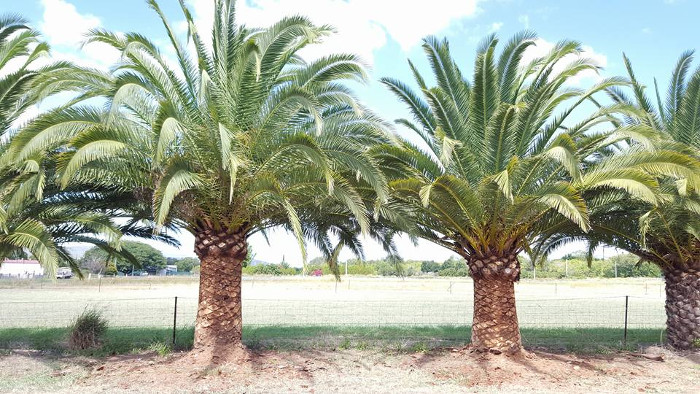
Canary Island Palm - Phoenix Canariensis Example
| Very popular - purchasers require excellence in appearance and health. The Canary Island Date Palm Tree (Phoenix canariensis) is native to the Canary Islands which are located in the Atlantic Ocean off the coast of northeast Africa. One of the larger palms the Canary Island palm can grow more than 20metres high. This cold hardy palm is a popular landscape item in warm climates around the world. The crown is made up of 50 or more large pinnate leaves which may reach 6 meters or more in length. The Canary Island Date Palm is a suckering palm that is normally pruned to a single trunk. When trimmed in this manner the tree may grow to a height of more than 30 metres. This palm produces yellow-orange to red fruit, called 'dates', these are oblong and about 3-4 cm. in length. The "dates" consist of a large pointed seed surrounded by sweet sugary flesh. Dates are formed from flowers on 1.2m. long inflorescences which emerge from among the leaves in spring. Only female palms produce dates and only if a male tree is nearby. Dates are not usually formed in very cool climates. The Canary Island palm is most often used as a theme or for generating a central focal point in landscapes. This majestic palm commands attention and is seen as a best choice palm to bring substance and instant maturity to any landscaping environment. Of no value if diseased, damaged or inaccessible
|
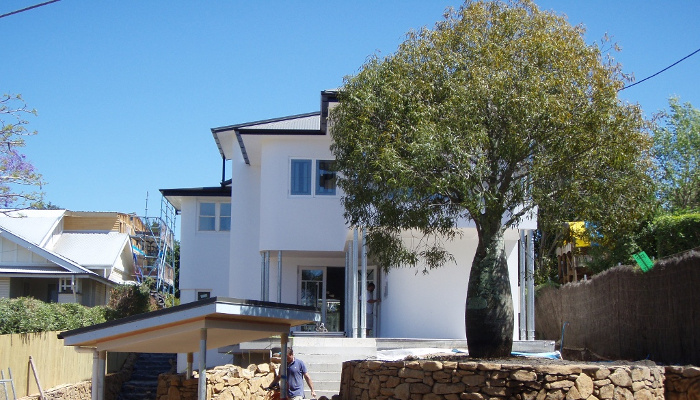
Queensland Bottle Tree - Brachychyton rupestris Example
| Very popular - purchasers require excellence in appearance and health. The Queensland Bottle Tree (Brachychiton rupestris). A native of Queensland, Australia this tree develops a grossly swollen trunk giving it a remarkable appearance and gives rise to its name. A drought-deciduous succulent tree, it is able to thrive in a wide variety of soil types and climates. Growing to 18-20 meters with the swollen trunk being primarily used for water storage. Leaves are variable ranging from narrow and elliptic to deeply divided producing clusters of yellowish bell shaped flowers hidden deep within the foliage, these are followed by woody boat-shaped fruits containing many hairy seeds. The Queensland Bottle Tree is often found planted in streets, parks, on farms and as features in landscaped gardens. Roma, Queensland is one country town with prominent bottle trees. They also grace the new entrance to the Environmentally Friendly, Spring Gully power station opened in 2008. Bottle trees grow best in well drained, slightly acidic soil, in full sunshine - these trees grow in temperatures of -10 °C to +50 °C in their natural habitat. The Bottle tree responds well to additional watering and a well chosen fertiliser and is suited to temperate subtropical and tropical climates. The Bottle Tree is very slow growing in its initial stages with the formation of the unique bottle shape is often not visible until the tree is ten to fifteen years old. Previous pruning can reduce desirability. Of no value if diseased, damaged or inaccessible.
|
Jacaranda - Jacaranda mimosifolia | Popular - purchasers require excellence in appearance and health. A deciduous or semi-deciduous tree which originated from South America. Sporting large feathery foliage and clusters of pale mauve, trumpet-shaped flowers in September and October. The Jacaranda grows to a height of more than 15 metres. Its bark is thin and grey-brown in colour, smooth when the tree is young though it eventually becomes finely scaled. Previous pruning can reduce desirability. Of no value if diseased, damaged or inaccessible.
|
Leopard - Caesalpinia ferrea | Popular - purchasers require excellence in appearance and health. Previous pruning can reduce desirability. Of no value if diseased, damaged or inaccessible.
|
Dragons Blood - Dracaena Draco Example | The Dragons Blood originated from the Island of Tenerife in the Canary Islands. Introduced to Australia as seed in the early colonial days it is a hardy tree with some specimens believed to be more than 650 years old. Dragon’s Blood trees grow in frost free areas across Southern Australia and prefer a warm, open, sunny aspect with good drainage. When the bark or leaves are cut the tree secretes a reddish resin known as Dragon's blood, used in ancient Roman and mediaeval magic and alchemy, then believed by the users to be the dried blood of dragons, today this resin is mixed with other compounds to make the red varnish used to coat violins.
Highly sought after - purchasers require excellence in appearance and health.
Previous pruning can reduce desirability. Of no value if diseased, damaged or inaccessible.
|
Fortune Wheel - Trachycarpus fortunei | Trachycarpus fortunei. This palm is a widely available palm and is a dependable and hardy species. Producing giant fan shaped leaves more than 1 metre across. The leaves sit atop a single trunk that is covered with the fibrous remains of old foliage.
A very accommodating plant which will grow in full sun in most well draining soils and is drought tolerant. Plants survive transplanting well with relatively small root balls though the fibrous root systems are extremely difficult to cut through. Growing to 3 metres in about ten years with mature specimens reaching 10 metres with extremely old specimens attaining a height of 18 to 20 metres.
Popular - purchasers require excellence in appearance and health. Previous pruning can reduce desirability. Of no value if diseased, damaged or inaccessible.
|
Foxtail Palm - Wodyetia bifurcata. | The Foxtail Palm (Wodyetia Bifurcata) was first discovered in Australia's World Heritage listed Tropical Rainforests in the 1970's. The Foxtail Palm's native habitat is Cape Melville, a landscape dominated by granite boulders and full sunshine. The Foxtail is a hardy palm which can thrive in a variety of climates. The Queensland Government still has this palm on its endangered species list, even tho there are now many thousands of them growing throughout the world.
Popular - purchasers require excellence in appearance and health. Of no value if diseased, damaged or inaccessible.
|
Pandanus, screw pine - Pandanaceae Example | Sought after - purchasers require excellence in appearance and health. Previous pruning can reduce desirability. Of no value if diseased, damaged or inaccessible.
|
Pony Tail, Bottle Palm, Elephants Foot - Beaucarnea recurvata a member of the Lilaceae (lily family). | Purchasers require excellence in appearance and health. Of no value if diseased, damaged or inaccessible.
|
Zamia Palm - Macrozamia Moorie | Popular - purchasers require excellence in appearance and health. Of no value if diseased, damaged or inaccessible.
|
Cycad - Cycas media (Cycas), Cycas revoluta (Cycas, King sago palm) | Popular - purchasers require excellence in appearance and health. Of no value if diseased, damaged or inaccessible.
|
Grass Tree - Xanthorea | Popular - purchasers require excellence in appearance and health. Of no value if diseased, damaged or inaccessible.
|
Cotton Palm - Washingtonia filifera | Quantity lots may be of value. Of value only in quantity lots of similar size and appearance. Disease free, undamaged and accessible.
|
Cocos palm, Queen Palm - Syagrus romanzoffiana | Of no commercial value |
Triangle Palm - Neodypsis decari | Quantity lots may be of value. Of value only in quantity lots of similar size and appearance. Disease free, undamaged and accessible.
|
Cuban Royal Palm - Roystonea regia | Quantity lots may be of value. Of value only in quantity lots of similar size and appearance. Disease free, undamaged and accessible.
|
Bangalow Palm or King Palm - Archontophoenix cunninghamiana | Quantity lots may be of value. Of value only in quantity lots of similar size and appearance. Disease free, undamaged and accessible.
|
Pigmy Date Palm - Phoenix robelenii | Quantity lots may be of value. Of value only in quantity lots of similar size and appearance. Disease free, undamaged and accessible.
|